The Role of Fogging in Biohazard Disinfection and Odor Elimination
Fogging is a powerful tool in biohazard disinfection, reaching hidden areas to eliminate harmful pathogens and odors effectively. This method disperses disinfectants as fine mist particles, ensuring thorough coverage in hard-to-reach spaces, enhancing safety, and restoring environments after contamination.
Bio--Trauma
1/29/20251 min read
Understanding Fogging
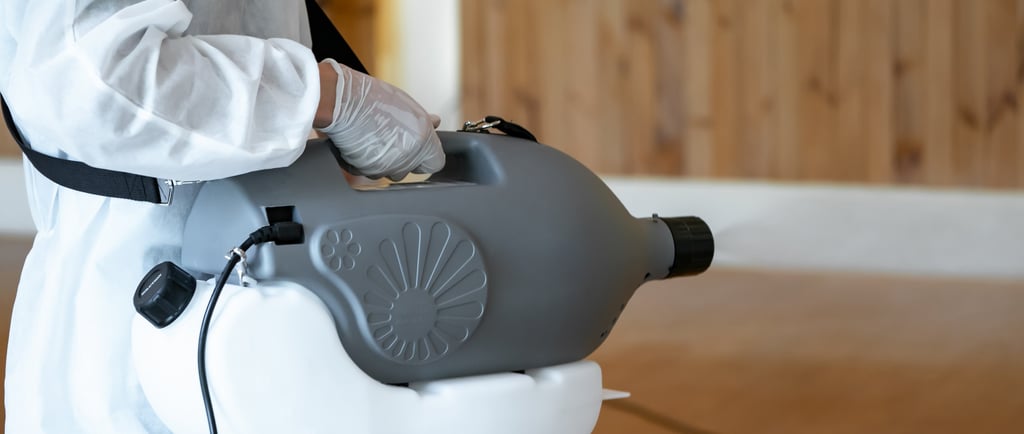
Fogging has emerged as a pivotal method in the realm of biohazard disinfection. This innovative technique utilizes a specialized device to disperse disinfectant solutions into tiny droplets, creating a fog-like mist. The effectiveness of fogging lies in its ability to cover large areas quickly and reach inaccessible surfaces, ensuring thorough disinfection. This method is especially beneficial in environments where traditional cleaning methods may fall short, such as healthcare facilities, schools, and various commercial settings.
Enhancing Biohazard Disinfection
Biohazard disinfection is critical in preventing the spread of infectious diseases, particularly in spaces prone to contamination. Fogging plays a significant role in enhancing these disinfection efforts. The tiny particles generated by fogging can penetrate complex surfaces and difficult-to-reach nooks and crannies, where pathogens might linger. This capability ensures that harmful microorganisms are eradicated effectively, thereby safeguarding the health of individuals within these spaces.
Odor Elimination Through Fogging
In addition to its disinfection benefits, fogging is also adept at tackling unpleasant odors. Often, foul odors are associated with the presence of mold, mildew, or other microorganisms. By deploying a fogging solution that includes odor-neutralizing agents alongside disinfectants, the efficacy of odor removal is greatly increased. As the fog settles into surfaces, it not only disinfects but also encapsulates odor-producing particles, resulting in a fresher, more pleasant environment.
Furthermore, the versatility of fogging technology allows for its application in various settings—from clinical environments to industrial applications—where both disinfection and odor control are paramount. This dual-functionality makes fogging an essential tool for maintaining sanitary conditions and optimal air quality.
In conclusion, fogging technology represents a robust solution for biohazard disinfection and odor elimination. Its ability to deliver disinfectants in a fine mist ensures comprehensive coverage and effectiveness against pathogens. Simultaneously, its contributions to odor control enhance the overall environment, making it an invaluable resource in maintaining public health and safety.
24 Hours. 7 Days a Week.
Providing Dedicated Crime and Trauma Cleanup Services.
support@biotraum.help
CONTACT US:
Our Services:
© 2026. All rights reserved.